Acne scars are one of the most common reasons people seek injectable treatment — and one of the most nuanced to treat, because not all scars are the same and not all injectables work the same way. Some scars need volume; others need regeneration; most benefit from a combination. Here's a clear comparison of the main injectable options — HA filler, PDRN, PLLA, and PMMA — what each does, and how to choose the right approach.
Why acne scars are harder to treat than they look
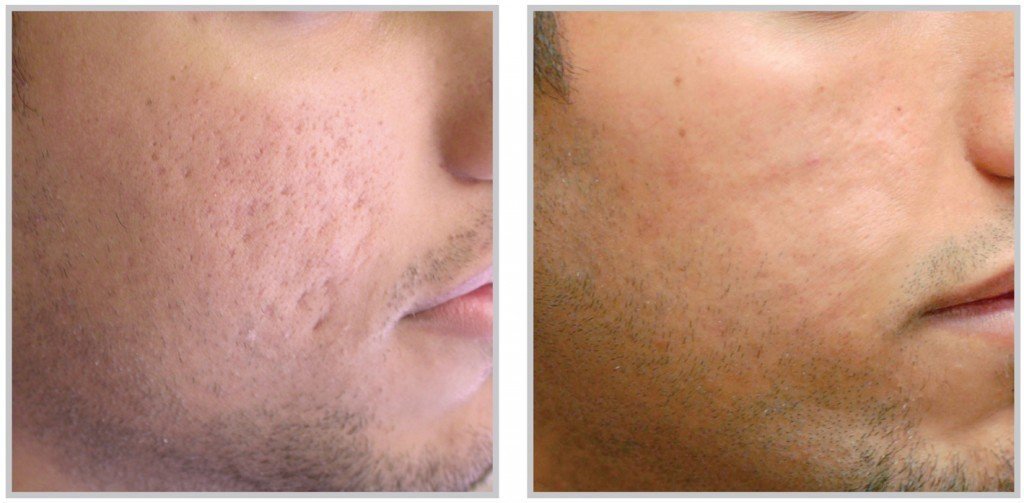
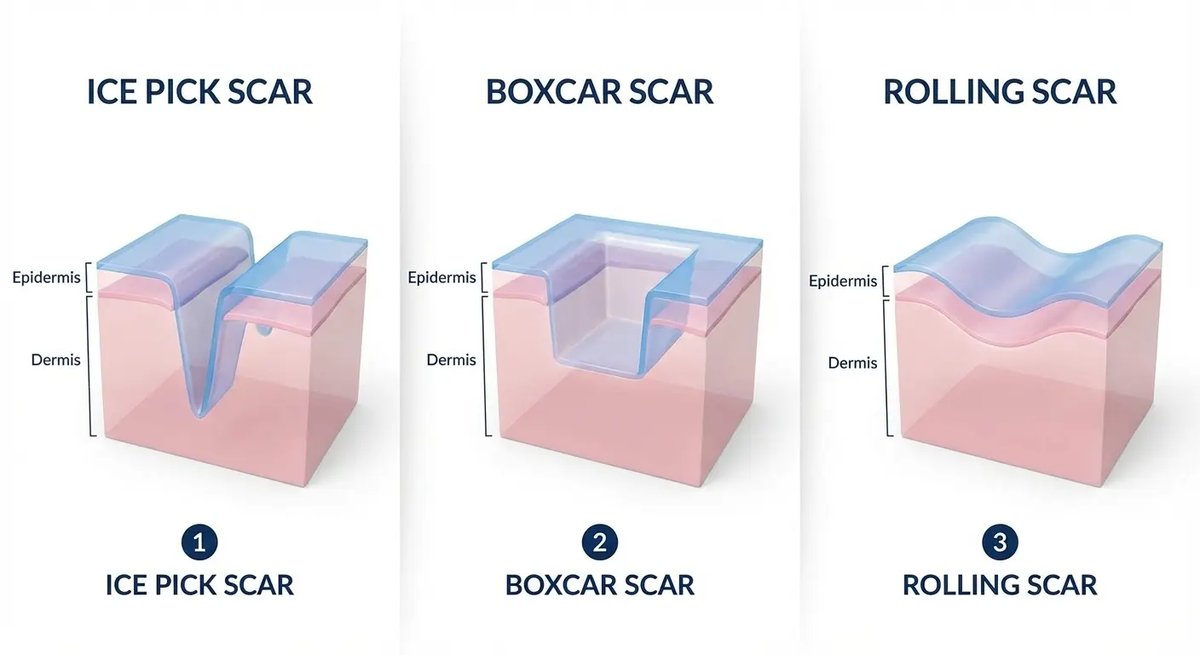
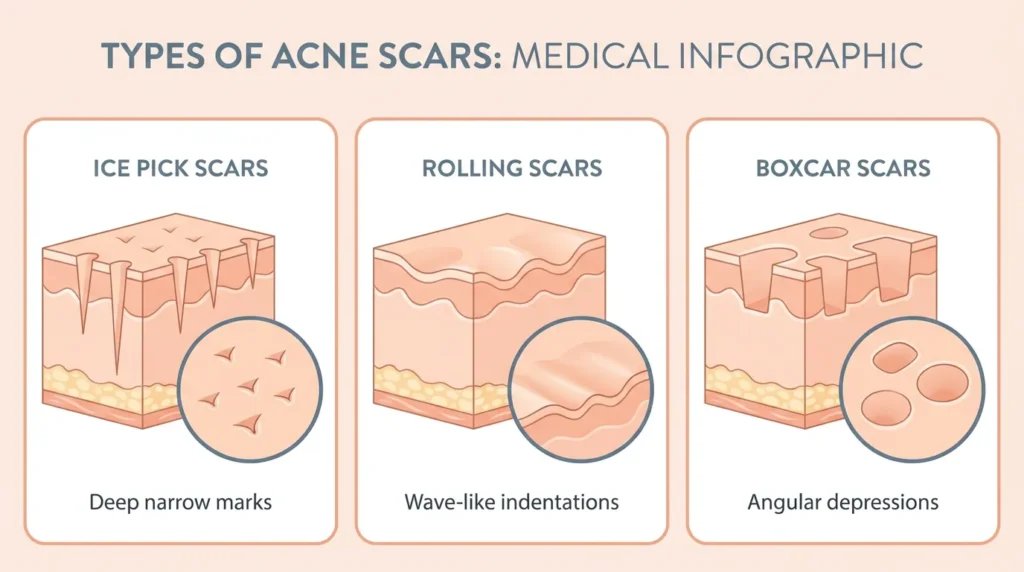
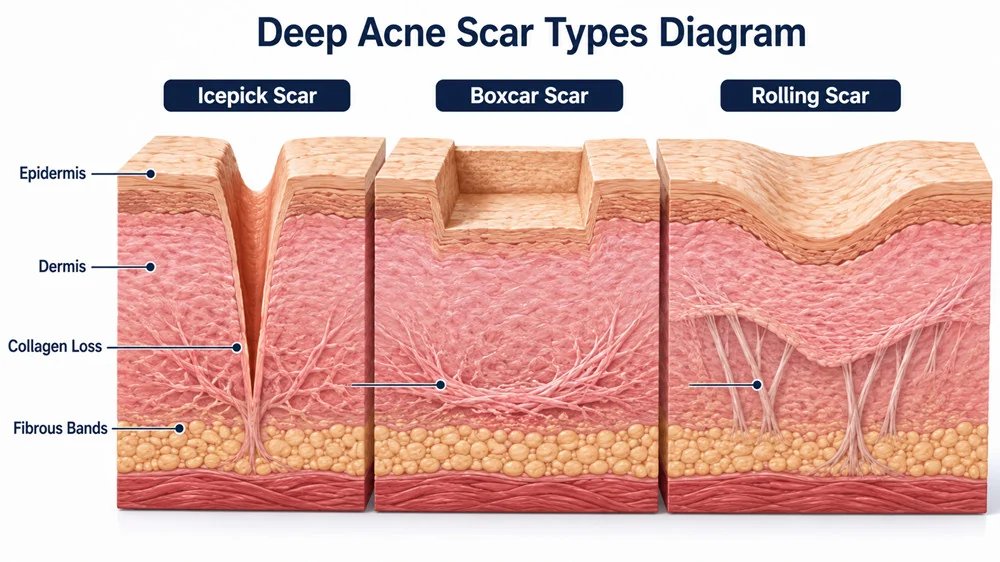
Acne scars aren't just surface marks. Most of the common types — boxcar, rolling, and ice-pick scars — involve structural damage below the skin surface: tethering of the skin to deeper tissue (the fibrous bands that pull the scar base down), loss of dermal volume, and impaired collagen architecture. Surface treatments alone (topicals, some lasers) improve texture and pigmentation but don't address the structural deficit underneath. That's where injectables come in.
The right injectable depends on which type of scar you're treating and what you want to achieve — volume, regeneration, or both.
Option 1: HA filler — immediate lift for rolling and boxcar scars
Hyaluronic acid filler can be injected under an atrophic (depressed) acne scar to physically lift it level with the surrounding skin. Results are immediate and the approach is well-suited to rolling scars (broad, shallow depressions) and wider boxcar scars.
The limitation: HA is temporary (typically 6–12 months in this application) and doesn't address the fibrous tethering underneath the scar — so it lifts the surface without treating the structural cause. For many patients this is a good starting point, especially combined with a technique called subcision (physically releasing the fibrous bands before injecting). HA's reversibility is also a safety advantage when working in scarred, irregular tissue.
Option 2: PDRN — regeneration from within
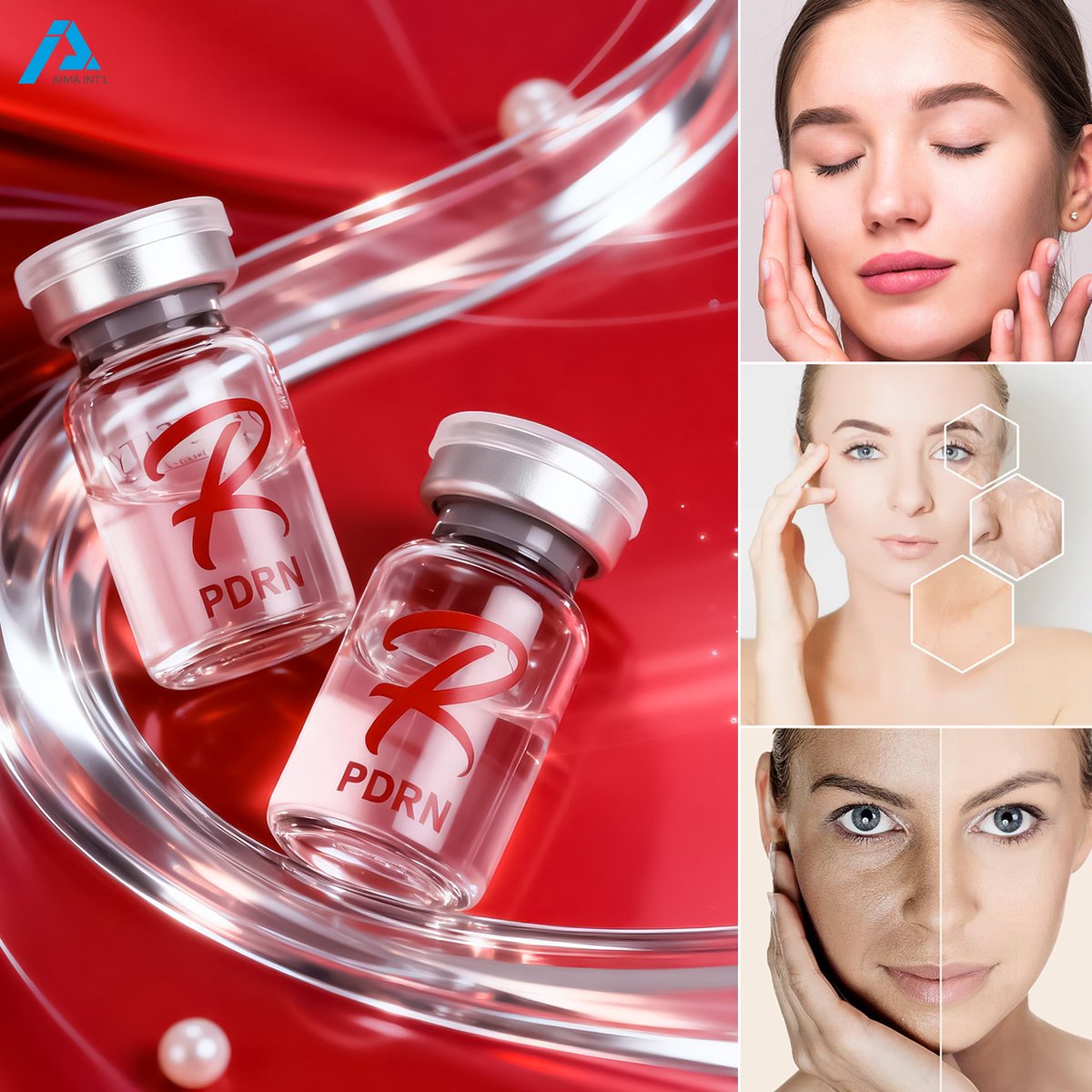
PDRN (polydeoxyribonucleotide) takes a different approach. Rather than filling the scar, it promotes the skin's own repair — stimulating fibroblast activity, collagen synthesis, and angiogenesis (new micro-vessel formation) in and around the scar. As AOMA's own clinical overview of PDRN for acne scars notes, patients typically begin to see improvement over four to six weeks, with scars continuing to fade with each session.
PDRN is particularly well-suited to:
Post-inflammatory changes — redness, texture, and pigmentation lingering after active acne
Shallow, diffuse scarring where regeneration of skin quality is the goal
Combination protocols — PDRN alongside filler or microneedling to improve both volume and skin quality simultaneously
Full details on how PDRN works are in our PDRN and polynucleotides guide.
Option 3: PLLA — long-term collagen stimulation
Poly-L-lactic acid biostimulators work over months to rebuild collagen in and around the scar, improving overall skin quality and some degree of volume in the treated area. Results are gradual — typically across a series of sessions — and last considerably longer than HA. PLLA suits patients who want a slow, natural improvement with longevity rather than an immediate visible lift.
Option 4: PMMA — the semi-permanent option for moderate-to-severe scars
For patients with moderate-to-severe atrophic (depressed) acne scars on the cheeks, PMMA filler is the only injectable with an established long-duration evidence base — and the only one with a clear FDA approval pathway for this indication (Bellafill, a PMMA-collagen product, is FDA-approved for atrophic acne scars on the cheeks in adults over 21). Clinical evidence shows PMMA results lasting over five years in acne scar applications.
PMMA works by providing a permanent microsphere scaffold — the collagen carrier gel absorbs, but the PMMA beads remain, providing lasting lift and stimulating some collagen production around them. Because it's not reversible, patient selection and injector skill are essential.
AOMA's PMMA filler range offers approximately 20% PMMA microspheres in 80% purified collagen gel, designed for acne scars, nasolabial folds, and deep wrinkles — CE-certified and available with OEM/private-label customization.
Comparing the options
HA Filler
PDRN
PLLA
PMMA
Mechanism
Immediate volume fill
Stimulates repair & collagen
Stimulates collagen
Semi-permanent scaffold
Best scar type
Rolling, wide boxcar
Shallow, diffuse, post-inflammatory
Diffuse, gradual improvement
Moderate-severe atrophic (cheeks)
Onset
Immediate
4–6 weeks
Weeks–months
Gradual
Lasts
6–12 months
Ongoing with sessions
~2 years
5+ years
Reversible
Yes
N/A
No
No
FDA note
Off-label for scars
Not FDA-regulated as a drug
Off-label
Bellafill approved for cheek acne scars
Combination protocols: the real-world approach
In practice, the best results for acne scars often come from combining approaches: subcision to release fibrous tethering, PDRN mesotherapy to improve skin quality and regeneration, HA or PMMA filler to lift the most depressed areas, and PLLA for long-term collagen support. No single injectable addresses all components of a complex scar.
Sourcing injectable acne scar treatments
For clinics building an acne scar protocol, having access to the full range — HA filler, PDRN, PLLA, and PMMA — from a single manufacturer simplifies procurement and quality control. AOMA manufactures across all four categories: HA dermal fillers, PDRN mesotherapy, PLLA biostimulators, and PMMA fillers — all to medical standard with CE, ISO 13485, and SGS certification, with private-label customization for brands and distributors.
Building an acne scar treatment line or sourcing injectable products? Request a quote and product catalog for full specifications, MOQ, and private-label options across the range.
FAQ
Does filler work for acne scars?
Yes, for atrophic (depressed) scars — HA filler lifts the scar surface immediately; PMMA provides a semi-permanent lift for moderate-to-severe scars. Neither addresses fibrous tethering without subcision.
Is PDRN good for acne scars?
Yes — PDRN promotes the skin's own repair and collagen synthesis, improving texture, redness, and shallow scarring over a course of sessions. It's often combined with filler for comprehensive treatment.
Is there an FDA-approved filler for acne scars?
Yes — Bellafill (PMMA) is FDA-approved for atrophic acne scars on the cheeks in adults over 21. HA and PLLA fillers are used for scars off-label with clinical evidence but without specific FDA approval for this indication.
How many sessions are needed for acne scar treatment?
It depends on the approach: HA filler can show results in one session; PDRN typically needs 4–6 sessions; PLLA needs a series of sessions over months; PMMA produces results from a small number of sessions with lasting effects.
Can you combine filler and PDRN for acne scars?
Yes — combining approaches is standard in experienced practice. PDRN improves skin quality and regeneration; filler lifts the depressed scar surface. Together they address both the structural and regenerative components.
Dr. Emily Carter (MD, Fellow of the American Academy of Dermatology) is a board-certified cosmetic surgeon in New York City with over 9 years of specialized experience in hyaluronic acid fillers, acne scar treatment, and minimally invasive facial contouring. She is particularly recognized for her expertise in advanced injectable therapies that effectively lighten acne scars, promote skin healing, and restore smoothness through targeted skin repair injection and skin booster techniques.