Hair loss is one of the most emotionally significant aesthetic concerns a patient can present with — and one of the most under-treated in clinic settings, largely because the available solutions have historically been limited to topicals (minoxidil, finasteride), invasive surgery, or waiting. Mesotherapy is another approach under study: it delivers selected compounds into the scalp near hair follicles. Clinical studies have reported potential benefits, but the evidence remains limited and protocols vary. Here’s what scalp mesotherapy involves, what ingredients matter, what results to expect, and what clinics need to know.
What is scalp mesotherapy?
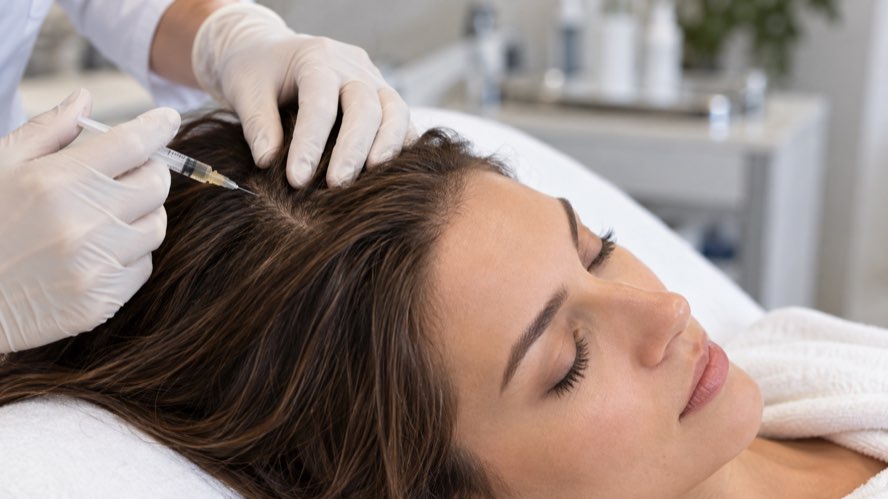
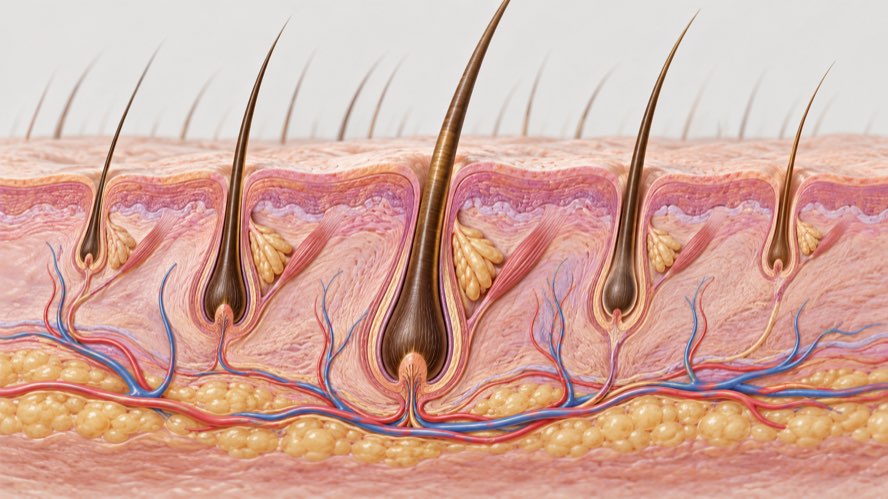
Scalp mesotherapy is the application of the mesotherapy technique — micro-injections of bioactive compounds into the superficial dermis — specifically to the scalp. Rather than applying actives topically (where penetration through the scalp’s thick skin is limited) or relying on systemic medication, mesotherapy places selected compounds into the superficial scalp tissues near follicles; the intended effect depends on the ingredient and delivery method.
The goal is twofold: reducing hair loss (by improving the conditions around the follicle) and stimulating hair growth (by activating follicles in the resting or transitional phase). It’s non-surgical, causes no significant downtime, and can be used as a standalone treatment or in combination with other approaches.
Ingredients found in scalp formulas
Not all scalp mesotherapy formulas are equal. The clinically relevant ingredient categories:
Biomimetic peptides. Peptides that mimic the signaling molecules naturally involved in hair follicle cycling — stimulating growth factors, improving follicular circulation, and extending the anagen (growth) phase. AOMA’s hair growth injection features 10ppm biomimetic peptides per ampoule formulated specifically for follicle revitalization.
PDRN (polydeoxyribonucleotide): Included in some scalp mesotherapy formulas for proposed regenerative effects. Mechanistic explanations such as angiogenesis and fibroblast signaling do not establish clinical hair-growth benefit; evidence for injectable scalp use remains under study. AOMA describes its H-PDRN and PDRN formulas as combining these ingredients with targeted scalp delivery.
Amino acids. Hair contains amino acids such as cysteine, which is part of keratin. Some formulas include amino acids, but the benefit of injecting them into the scalp depends on the product and is not established for every patient.
Vitamins (biotin, B complex, vitamin C). Deficiencies in some nutrients can contribute to hair loss, but supplementation or injection is not a substitute for identifying the cause. Evidence for delivering vitamins by scalp mesotherapy varies by formula.
DHT-related ingredients. Some formulas include botanical extracts such as saw palmetto. Evidence for these ingredients when delivered by scalp injection is limited, and they should not be presented as a proven replacement for established care.
HA (hyaluronic acid). Included in some formulas for scalp hydration and creating a more supportive environment for follicle health.
Results and treatment timeline
Mesotherapy for hair is generally studied as a course treatment, but there is no validated universal timeline or schedule. Hair growth is slow, so any visible change would take time; results vary by the cause of hair loss, ingredients, and individual factors.
A 2022 systematic review included 12 studies and found that the evidence base was limited by small sample sizes and insufficient comparisons with other treatments. It is not currently appropriate to claim that scalp mesotherapy is comparable or superior to topical minoxidil, or that it has no systemic risks. See the systematic review. A dermatologist can help compare options and monitor progress.
Who may be considered?
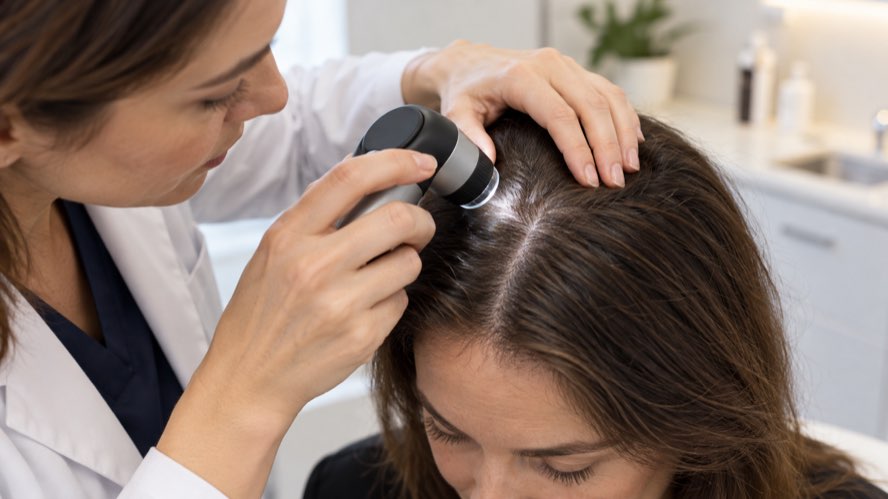
Studies have investigated scalp mesotherapy in people with early-to-moderate pattern hair loss and other types of diffuse shedding, but evidence is not sufficient to call it the most effective option. It is unlikely to restore hair where follicles are permanently scarred or absent. A scalp assessment can identify the likely cause and set realistic expectations before treatment.
Common delivery methods
Scalp mesotherapy can be administered by:
Manual injection (precise but slower, requires more practitioner time)
Mesotherapy gun (automated multi-point delivery, consistent depth and dose)
Microneedling (creates micro-channels for product penetration — less direct than injection but effective for some formulas)
Meso roller (similar to microneedling)
For scalp work, the mesotherapy gun or manual injection is preferred for follicle-level delivery precision; microneedling is an appropriate adjunct.
Combining approaches
Scalp mesotherapy works well as part of a multi-modality approach. Common combinations:
Mesotherapy + topical minoxidil — mesotherapy addresses scalp circulation and follicle nutrition; minoxidil works on the anagen phase extension
PDRN hair growth + skin quality PDRN — for patients also receiving PDRN facial treatment, the same product platform covers both
Choosing products for clinic use
For clinics adding hair restoration to a service menu, the product selection question is the same as for skin mesotherapy: ingredient quality, concentration, and manufacturing standard. AOMA’s hair growth injection range covers biomimetic peptide formulas, PDRN-enhanced scalp solutions, and amino acid and vitamin blends — all across the mesotherapy manufacturing platform with GMP production, CE and ISO certification, and private-label customization for brands and distributors.
For clinics building a complete treatment menu, the hair growth line sits naturally alongside PDRN facial rejuvenation and skin booster and mesotherapy — the same product platform, the same manufacturer, the same manufacturing standard.
Sourcing scalp mesotherapy or hair growth injections for your clinic or brand? Request a quote and product catalog for formulation options, ingredient specifications, MOQ, and private-label customization.
FAQs
Does mesotherapy work for hair loss?
Some small studies report improvement in selected patients, but the evidence is limited and does not establish that mesotherapy is comparable or superior to minoxidil. The cause of hair loss should be assessed by a qualified clinician before choosing treatment; results are not guaranteed.
How many sessions of scalp mesotherapy are needed?
There is no universal evidence-based session count for scalp mesotherapy. Study protocols vary, and any response is uncertain. A clinician should tailor the plan to the diagnosis and product and reassess whether it is helping.
Is scalp mesotherapy painful?
The scalp has more nerve endings than most facial areas, so treatment can be uncomfortable. A topical numbing cream applied 20–30 minutes beforehand significantly reduces discomfort. Mesotherapy gun delivery at consistent depth also tends to be more tolerable than variable manual injection.
Can mesotherapy regrow hair in bald areas?
In areas where follicles are still present but miniaturized (early androgenetic alopecia), mesotherapy can help reactivate them. In areas where follicles are completely gone or scarred, hair regrowth is not possible without transplantation.
What is PDRN hair treatment?
PDRN scalp mesotherapy uses polydeoxyribonucleotide, which may be derived from fish DNA depending on the product. It is promoted for regenerative effects, but its clinical role in scalp hair growth remains under study. Check the specific product ingredients and discuss suitability with a clinician.
Dr. Emily Carter (MD, Fellow of the American Academy of Dermatology) is a board-certified cosmetic surgeon in New York City with over 9 years of specialized experience in hyaluronic acid fillers, acne scar treatment, and minimally invasive facial contouring. She is particularly recognized for her expertise in advanced injectable therapies that effectively lighten acne scars, promote skin healing, and restore smoothness through targeted skin repair injection and skin booster techniques.