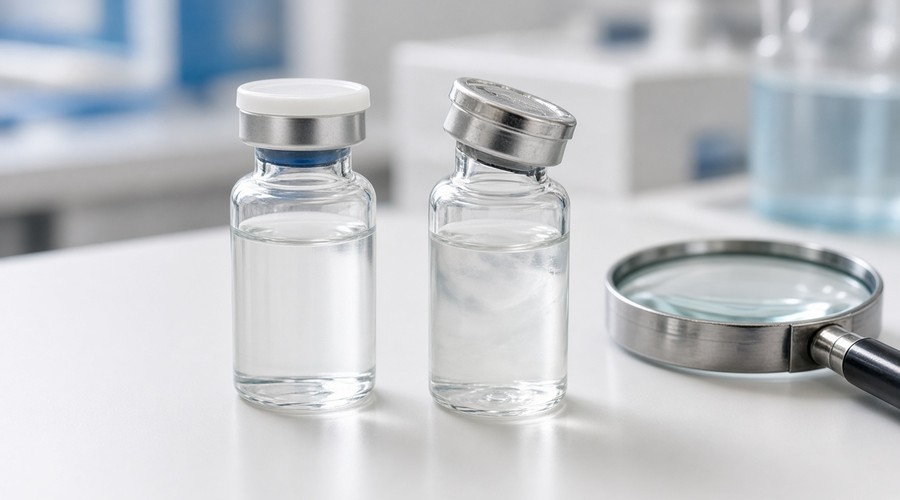
Skin whitening injections are sold by dermatology clinics, beauty salons and social media shops alike. In Indonesia they are known as suntik putih or suntikan pemutihan; elsewhere they are marketed as glutathione drips, vitamin C shots or "brightening boosters". Are these injections safe, who regulates them, and how can a clinic or patient tell a genuine product from a fake?
This guide focuses on safety, regulation and counterfeit detection. If you want to know which ingredient works best for melasma or dullness, read our separate comparison of glutathione vs vitamin C vs tranexamic acid injections.
Are Skin Whitening Injections Safe? The Short Answer
It depends on three things: what is being injected, how it is injected and where the product came from. A registered product, used for an approved or evidence-based indication by a qualified practitioner in a sterile setting, carries a very different risk profile from an unregistered vial bought online and given as an intravenous drip in a salon.
Two facts frame the discussion. First, both the US FDA and the Philippine FDA state that they have not approved any injectable product for skin whitening or lightening. Second, the biggest risks often come not from the ingredient itself but from unknown products and unsafe injection practices. No injection can permanently change natural skin color either, a point our article on permanent skin whitening injections explains in more detail.
What Are the Risks of Whitening Injections?
Risks from the product itself
The US FDA has warned that injectable skin whitening products sold online and in spas may be unsafe and ineffective and may contain unknown harmful ingredients or contaminants. As an FDA pharmacist put it, users are "essentially injecting an unknown substance" without knowing what it contains or how it was made. According to the FDA, these products can contain glutathione, vitamin C, collagen and even human placenta.
Risks from the injection procedure
Any injection breaks the skin barrier. The FDA notes that improper or unsafe injection practices may transmit disease, cause infection and result in serious injury. The Philippine FDA specifically mentions the risk of transmitting HIV and hepatitis B and C, which is of particular concern when a non-medical person gives the treatment or the facility is not sterile.
Risks specific to high-dose IV drips
Most safety warnings concern intravenous use. The Philippine FDA lists possible toxic effects of injectable glutathione on the liver, kidneys and nervous system, plus the possibility of Stevens-Johnson syndrome, a severe skin reaction. For IV vitamin C, it warns that kidney stones may form if the urine is acidic and that large doses have led to hemodialysis in people with G6PD deficiency. A US survey of IV vitamin C use found side effects in 101 of 9,328 patients, mostly minor, but confirmed known complications in people with kidney impairment or G6PD deficiency (Padayatty et al., 2010). Screening matters.
Unknown long-term effects
A 2016 review in the South African Medical Journal found no published studies of IV glutathione for skin lightening and no data on its safety for chronic use. The authors also raised a theoretical concern: because glutathione shifts melanin production from brown to red pigment, it might increase the risk of sun-induced skin cancer in people previously protected by darker pigment (Davids et al., 2016). The Philippine FDA voices the same theoretical concern. These are open questions, not proven harms.
How Regulators View Skin Whitening Injections
United States
The FDA states that it has not approved any injectable drug for skin whitening or lightening and treats such products as unapproved new drugs. In 2014, US Marshals seized unapproved whitening kits sold by a New Jersey company at the FDA's request, and in 2017 a federal judge ordered the company to stop selling and recall some products.
Philippines
In its 2019 advisory on the unsafe use of glutathione as a skin lightening agent, the Philippine FDA stated that it has not approved any injectable product for skin lightening and that injectable glutathione is approved only as an adjunct treatment in cisplatin chemotherapy. It advised the public to consult board-certified dermatologists and to avoid buying injectable products online.
Indonesia
Indonesia's food and drug authority, BPOM, classifies vitamin C injection as a prescription drug for treating vitamin C deficiency, according to a study by BPOM staff (Rastika et al., 2022). For oral glutathione supplements, BPOM allows a maximum of 600 mg per day and does not allow products to be promoted as skin whiteners.
Everywhere else
Rules on product registration and on who may inject differ by country. Before buying or offering any brightening injectable, check how your national regulator classifies the product and its intended use.
The Counterfeit Problem
High demand, online sales and cross-border shipping make whitening injectables a target for falsification. The World Health Organization's fact sheet on substandard and falsified medical products estimates that at least 1 in 10 medicines in low- and middle-income countries are substandard or falsified and notes that such products are often sold online or in informal markets. Falsified products deliberately misrepresent their identity, composition or source.
Whitening products are no exception. When BPOM researchers bought four unregistered vitamin C injection brands from an online marketplace and tested them, three did not meet the vitamin C content stated on the label; one contained only 12.8% of the claimed amount. The same study found these injections sold through e-commerce, beauty clinics and beauty exhibitions, and eight of nine clinics offering whitening injections would not disclose the brand they used (Rastika et al., 2022). In 2025, BPOM reported that lab tests on samples of an unregistered glutathione whitening supplement found no L-glutathione at all, and that samples differed in size, design, logo and hologram. That case involved oral capsules, not injections, but shows how far labels can drift from contents.
How to Spot Fake Skin Whitening Injections: A Checklist
No single check proves a product is genuine, but each red flag is a reason to verify.
What to check
What a genuine product should show
Red flag
Registration
A registration or license number that you can find in your national regulator's database for that exact product
No number, a number that does not match, or a "registered in another country" claim only
Label and language
Full ingredient list, strength, volume, route of use, batch number, manufacturing and expiry dates, and labeling in a language required in your market
Missing ingredients or dates, spelling errors, or labeling only in a foreign language
Packaging and seals
Consistent print quality, intact flip-off caps and tamper-evident seals, and the same design across batches
Loose or crooked caps, broken seals, or differences in size, logo or hologram between boxes
Contents
Solution or powder that matches the product description
Cloudy liquid, particles or discoloration not described by the manufacturer
Claims
Modest, specific claims consistent with local rules
Promises of permanent whitening, "full-body" lightening or cures for unrelated diseases
Source
Manufacturer or authorized distributor that can provide documentation and batch traceability
Social media sellers, anonymous marketplace shops or prices far below the usual range
Who injects
A qualified, licensed practitioner in a clean clinical setting
Home visits, salon "drip parties" or a provider who will not name the product
BPOM's own consumer shortcut is "Cek KLIK": check the packaging (Kemasan), label (Label), marketing authorization (Izin edar) and expiry date (Kedaluwarsa) before buying.
Questions Patients Should Ask Before Treatment
What exactly is in the injection, and can I see the original box and vial?
Is this product registered for this use in our country?
Is it injected into the skin (mesotherapy) or given as an IV drip?
Who will perform the treatment, and what are their qualifications?
Do I need any tests first, such as G6PD or kidney screening for high-dose vitamin C?
What results are realistic, and what should I do if I have a reaction?
For Clinics and Distributors: Sourcing Genuine, Traceable Products
For clinics and distributors, a fake vial is a patient-safety, legal and reputational problem. Buy directly from manufacturers or authorized distributors, keep batch numbers on file for every treatment, confirm that labeling and registration suit your market, and quarantine any stock with damaged seals or inconsistent packaging.
AOMA supplies brightening mesotherapy solutions, including TXA, vitamin C and combination formulas, to licensed clinics and distributors, with batch-traceable stock and OEM production. Browse the AOMA skin whitening injection range. The MOQ starts from 200 units for both stock and OEM orders. Stock orders ship within 24 hours, and OEM lead time is 2–3 weeks after artwork, formula and packaging details are confirmed. AOMA holds CE, ISO 13485, GMP and FDA certificates.
FAQ
Are skin whitening injections safe?
They are not approved for skin whitening by the US FDA or the Philippine FDA. Risks depend on the product, the route and the injector. Unregistered products and IV drips given outside medical settings carry the greatest risk.
Is IV glutathione approved for skin whitening?
No. The Philippine FDA approves injectable glutathione only as an adjunct in cisplatin chemotherapy, and the US FDA has not approved any injectable drug for skin lightening.
How can I tell if a whitening injection is fake?
Check that the registration number matches your regulator's database, the label is complete, seals are intact, packaging is consistent and the seller can document the source. Unusually low prices and anonymous online sellers are warning signs.
Is "suntik putih" legal in Indonesia?
BPOM classifies vitamin C injection as a prescription drug, and unregistered vitamin C injections have been found sold online, at beauty exhibitions and through clinics. Accept only registered products given by authorized medical professionals.
What should I do if I react badly to a whitening injection?
Seek medical care promptly and report the reaction to your national regulator. Keep the product box or batch number if you can.
References
U.S. Food and Drug Administration. Consumer update on injectable skin whitening products (Chinese-language edition; updated September 26, 2017). https://www.fda.gov/consumers/consumer-updates/ninyinglejieyouguanjifumeibaizhushechanpindexinxi
Food and Drug Administration Philippines. FDA Advisory No. 2019-182: Unsafe use of glutathione as skin lightening agent. 2019. https://www.fda.gov.ph/fda-advisory-no-2019-182-unsafe-use-of-glutathione-as-skin-lightening-agent/
World Health Organization. Substandard and falsified medical products. Fact sheet. https://www.who.int/news-room/fact-sheets/detail/substandard-and-falsified-medical-products
Rastika DGB, Triwinanti N, Salaffudin MG. Peredaran vitamin C injeksi ilegal di Indonesia [Circulation of illegal vitamin C injections in Indonesia]. Eruditio. 2022;2(2):13–21. doi:10.54384/eruditio.v2i2.109
Badan Pengawas Obat dan Makanan (BPOM). Siaran Pers HM.01.1.2.08.25.146: Waspada produk Dr. LSW, suplemen kesehatan ilegal dengan klaim pemutih kulit. 21 August 2025. https://www.pom.go.id/siaran-pers/waspada-produk-dr-lsw-suplemen-kesehatan-ilegal-dengan-klaim-pemutih-kulit
Davids LM, Van Wyk JC, Khumalo NP. Intravenous glutathione for skin lightening: inadequate safety data. S Afr Med J. 2016;106(8):782–786. PMID: 27499402.
Padayatty SJ, Sun AY, Chen Q, et al. Vitamin C: intravenous use by complementary and alternative medicine practitioners and adverse effects. PLoS One. 2010;5(7):e11414. PMID: 20628650.
This article is for educational purposes only and is not medical or legal advice. Injectable treatments should be assessed and performed by qualified practitioners using products registered in line with local regulations.
Dr. Emily Carter (MD, Fellow of the American Academy of Dermatology) is a board-certified cosmetic surgeon in New York City with over 9 years of specialized experience in hyaluronic acid fillers, acne scar treatment, and minimally invasive facial contouring. She is particularly recognized for her expertise in advanced injectable therapies that effectively lighten acne scars, promote skin healing, and restore smoothness through targeted skin repair injection and skin booster techniques.