Introduction: The European Mesotherapy Market: Opportunities And Compliance Thresholds Coexist
The non-surgical aesthetic medical market in Europe is growing at an annual rate of 9.2%, among which Mesotherapy is one of the fastest-growing areas. However, market opportunities are accompanied by strict regulatory barriers. More than 70% of non-EU suppliers are unable to enter due to their failure to meet complex compliance requirements. As a clinic, distributor or purchasing manager, you need to accurately understand and respond to these requirements, transforming compliance from a cost item into a core competitiveness.
This article aims to provide a clear guide on how to build market trust and ensure business success by meeting European regulatory requirements. The core lies in understanding that the CE marking for Mesotherapy products is not only a legal label, but also proof of the safety, effectiveness and quality of the products.
The Legal Essence And Acquisition Path Of The CE Marking
Product Classification Is The Starting Point Of Compliance
The first step is to accurately define the legal identity of the product, which determines the applicable regulatory path. In the European Union, Mesotherapy products are generally classified as medical devices or cosmetics based on their intended use. If a product claims to have medical purposes such as diagnosing, treating or alleviating skin conditions, it will be classified as a medical device and be subject to the Medical Device Regulations. If it is only used for basic purposes such as cleaning or beautification, it should be managed as a cosmetic. Classification errors will directly lead to failed market access and potential legal risks.
The Certification Under The Mdr Framework Has Undergone Fundamental Changes
Since the implementation of the EU's Medical Device Regulation, the process and requirements for obtaining the CE marking certification have been significantly tightened. This process has shifted from being mainly self-declared by manufacturers to a comprehensive assessment involving a notified body designated by the European Union. At present, the compliance path must include technical documents, clinical evaluations, quality management system audits, and the establishment of a post-market supervision system. A complete certification process usually takes 12 to 24 months and generates hundreds of pages of technical documentation. For suppliers planning to export, understanding the global export regulations for cosmetic injections is the first step towards successful planning.
Quality System: The Cornerstone Of Safety And Compliance
ISO 13485 And Gmp Together Constitute The Quality Assurance System
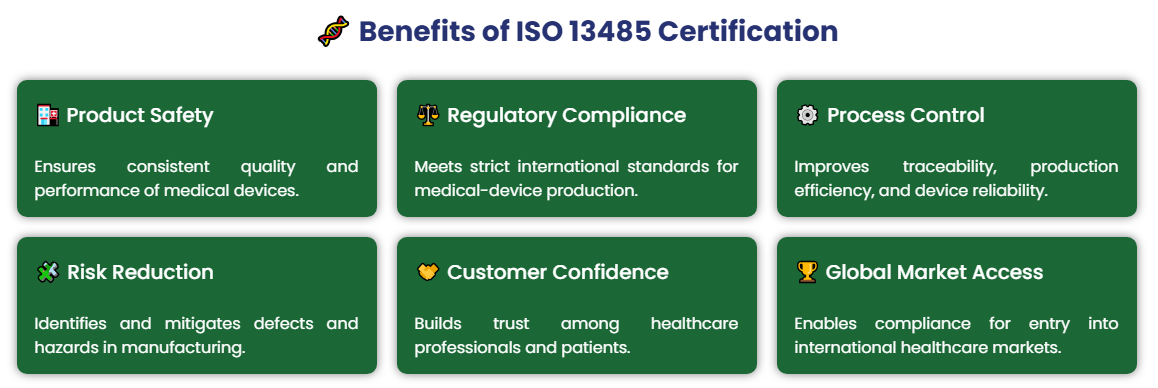
The safety of a product is rooted in its production quality system. For ISO 13485 for aesthetic injectables, an international standard for quality management covering the entire process from design and development, production to after-sales service has been established. GMP compliance for mesotherapy suppliers specifically stipulates practical requirements such as the cleanliness of the production environment, personnel operation, equipment and material control. The two work together to ensure that the product is under control at every stage.
For products containing components such as hyaluronic acid, the requirements for the quality system are more specific. For instance, the molecular weight, purity and endotoxin level of raw materials must be strictly controlled, and additional biocompatibility tests should be conducted to verify safety.
The Evaluation Of Suppliers Should Be Based On Verifiable Audit Points
When choosing a compliant supplier, one should go beyond a simple verification of certificates and conduct a substantive assessment. Key audit points should include: confirming that the scope of the quality management system certification covers sterile injection products; Review the latest monitoring report of the cleanroom environment; Verify the sterilization methods of the products and related reports; Review the supplier qualifications and inspection certificates of key raw materials (such as hyaluronic acid); And evaluate the stability research data that supports the shelf life of its products.
Business Models Within The Compliance Framework: Private Label Opportunities
Successful Private Label Collaborations Rely On Shared Compliance Responsibilities
Private label mesotherapy opportunities offers the possibility of brand differentiation, but its success is based on strict compliance. This cooperation model requires both the brand owner and the manufacturer to jointly assume compliance responsibilities. Producers must ensure that the product formula, packaging and labels fully comply with EU regulations and be able to provide complete technical documentation support. Brand owners need to understand the specific regulatory differences in the target market, especially the regulatory boundaries regarding product claims.
Market Trends Show That Compliance Capabilities Directly Affect Competitiveness
An analysis of mesotherapy market trends 2025 reveals that there are differences in the acceptance and willingness to pay for compliant products among different regions. In mature markets such as Western Europe, despite strict regulations, customers are willing to pay a premium for high-quality products with complete compliance documents. This requires suppliers not only to meet the basic CE marking certification, but also to continuously update clinical evidence and follow the mesotherapy safety guidelines 2025 to establish long-term trust.
Global Compliance Layout: Planning Beyond The European Market
Establishing a global business requires understanding the regulatory frameworks of different jurisdictions. The EU's Medical Device Regulation is renowned for its full life-cycle supervision and emphasis on clinical evidence. In the United States, the regulatory path of the Food and Drug Administration is different. It places more emphasis on design control and does not have the concept of the CE marking. Products need to be approved through the 510(k) or pre-market approval pathway to be launched on the market. After Brexit, the UK established an independent UKCA marking system. Although it is basically in line with the MDR, it requires a separate compliance assessment. Markets such as Southeast Asia and the Middle East present diverse characteristics. They may partially recognize international certifications, but often have localization requirements.
Global regulatory requirements for products containing hyaluronic acid are particularly specific. For instance, in the United States,hyaluronic acid fillers are typically classified as Class III medical devices and require strict pre-market approval. In China, such products are also classified as Class III medical devices. The registration process is lengthy and local clinical trials are usually required. Therefore, formulating an "EU +" compliance strategy that is based on the highest standards (such as the EU MDR) and can be adaptively adjusted according to the target market is the key to efficient global layout.
Conclusion And Action Guide
In the European Mesotherapy market, the compliance of the system is the core for transforming market entry barriers into sustainable competitive advantages. It directly builds customer trust, reduces operational risks, and lays the foundation for brand differentiation.
We suggest that you take the following steps to initiate the compliance process: First, accurately classify your product or target product in terms of law. Secondly, systematically assess the quality management system certification and specific production capacity of potential production partners, especially their GMP compliance level. Finally, when planning private label collaborations, regulatory support and technical document management capabilities should be regarded as key criteria for selecting suppliers.
We can provide you with a professional preliminary assessment of the regulatory path. If you need a compliance gap analysis for your specific product or a more detailed market access guide, please contact our expert team.
Dr. Emily Carter (MD, Fellow of the American Academy of Dermatology) is a board-certified cosmetic surgeon in New York City with over 9 years of specialized experience in hyaluronic acid fillers, acne scar treatment, and minimally invasive facial contouring. She is particularly recognized for her expertise in advanced injectable therapies that effectively lighten acne scars, promote skin healing, and restore smoothness through targeted skin repair injection and skin booster techniques.